K.V. Byregowda Circle to Kempegowda Circle
About
As part of the Revitalising Public Spaces initiative, this proposal focuses on a corridor that carries deep civic significance — stretching between a circle named for Nadaprabhu Hiriya Kempegowda, the 16th-century founder of Bengaluru who built the city's first lakes, markets, and planned settlement in 1537, and a circle honouring Krishna Byregowda, a respected minister who has long championed the welfare of Bengaluru and its citizens. This heritage-laden road in Jakkur forms part of one of North Bengaluru's most active neighbourhood corridors, threading together everyday civic life with a layered sense of local identity and memory.
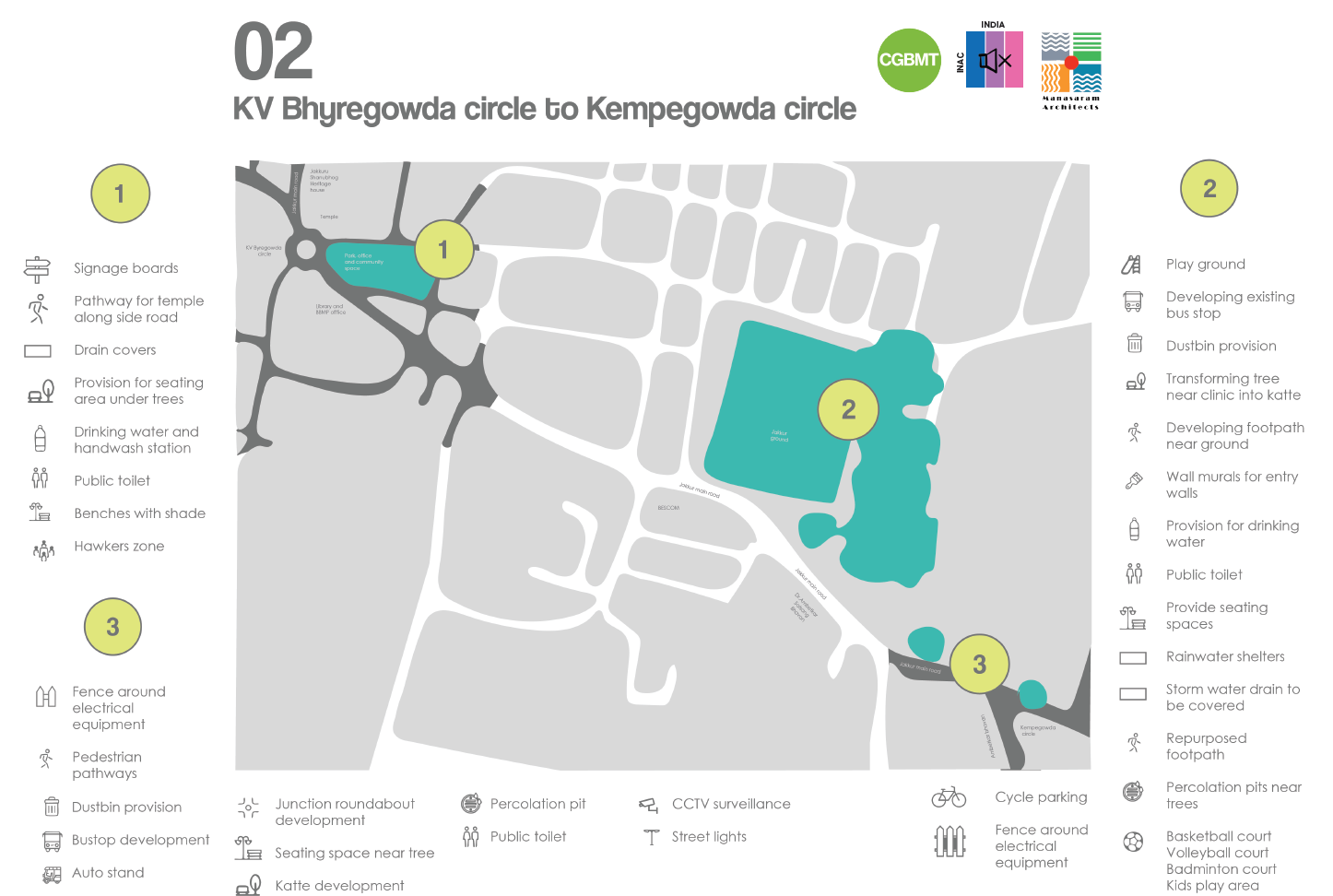
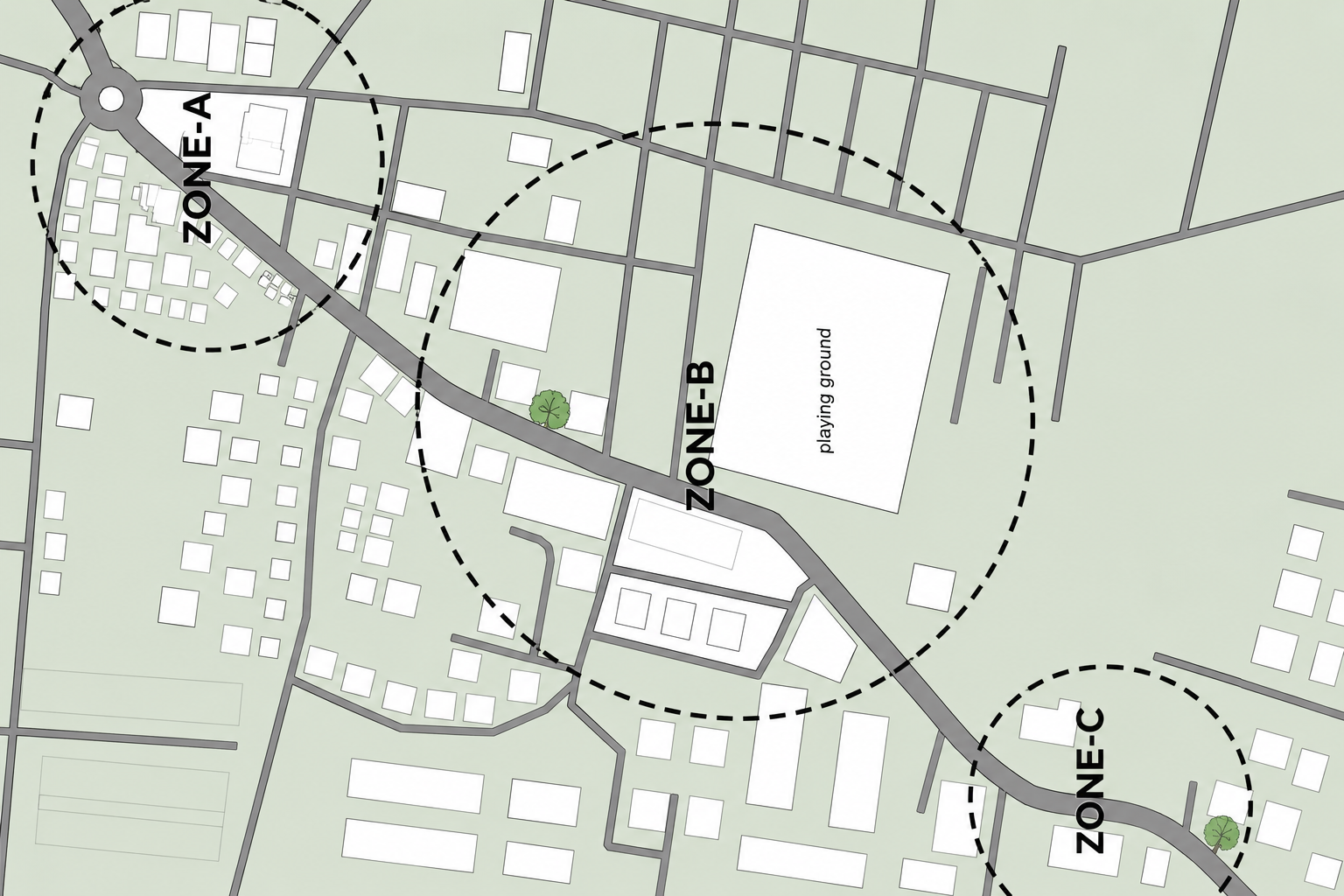
The proposal responds to growing urbanisation and traffic pressures by upgrading the public realm through improved pedestrian infrastructure, accessible amenities, designated hawker zones, enhanced bus and auto facilities, and safer traffic management — while preserving the area's established social character. Existing gathering spaces — the three kattes, Jakkur Ground, parks and community spaces — are retained and strengthened to continue supporting informal life across generations. Environmental measures include bamboo plantations, upgraded stormwater drainage, improved sanitation and public lighting. Heritage conservation is addressed directly through the adaptive reuse of a historic residence along the corridor as a community museum, anchoring the street's memory within its everyday civic function. Together, these interventions aim to create a safer, more inclusive and more dignified neighbourhood, one worthy of the civic ideals of the two figures whose names frame its ends.
Location: Jakkur Ward No. 5, Bangalore
Project Type: Urban Public Space Revitalization Proposal
Client: Greater Bangalore Authority (GBA)
Total Area: 13,628.22 sq.m.
Parent Project: Revitalizing Public Spaces
Project at a Glance
-
Bamboo plantations along the corridor provide shade, green buffers and local carbon sequestration.
Simple, durable paving and native planting reduce maintenance while improving everyday usability.
Upgraded stormwater drainage and sanitation systems support long-term environmental health at street scale.
-
Continuous footpaths, crossings and traffic calming measures improve walkability and everyday safety for all users.
Enhanced lighting and clear sightlines make the corridor safer during evening and early morning use.
Bus and auto stands organised with seating and shade improve comfort for commuters and local residents.
-
Existing kattes, Jakkur Ground, parks and community spaces are preserved and strengthened as neighbourhood social anchors.
Designated hawker zones integrate livelihoods into the street rather than displacing them, keeping the corridor socially active.
Adaptive reuse of a historic residence as a community museum links everyday movement with local memory and heritage.