House of Hungarian Music
About
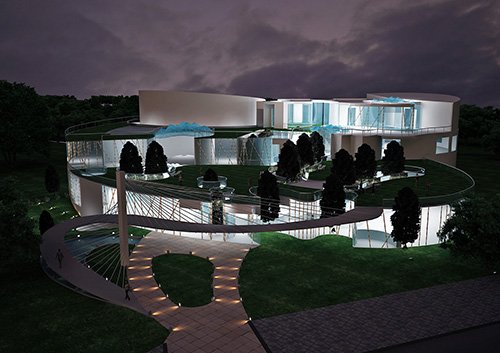
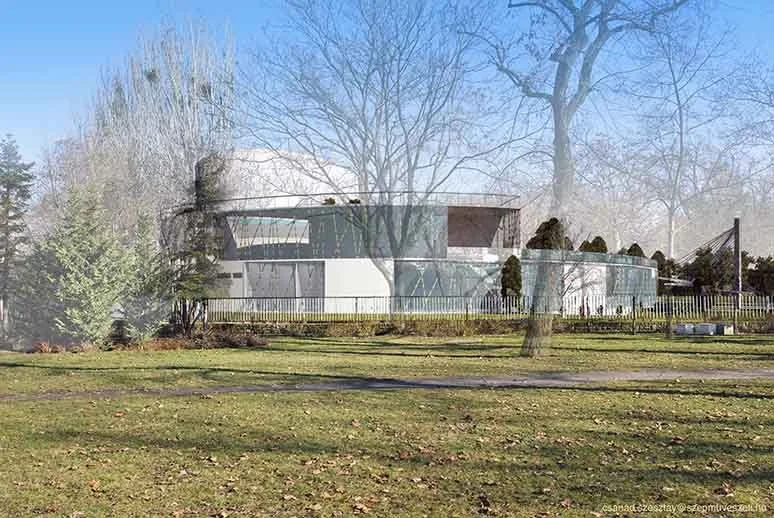
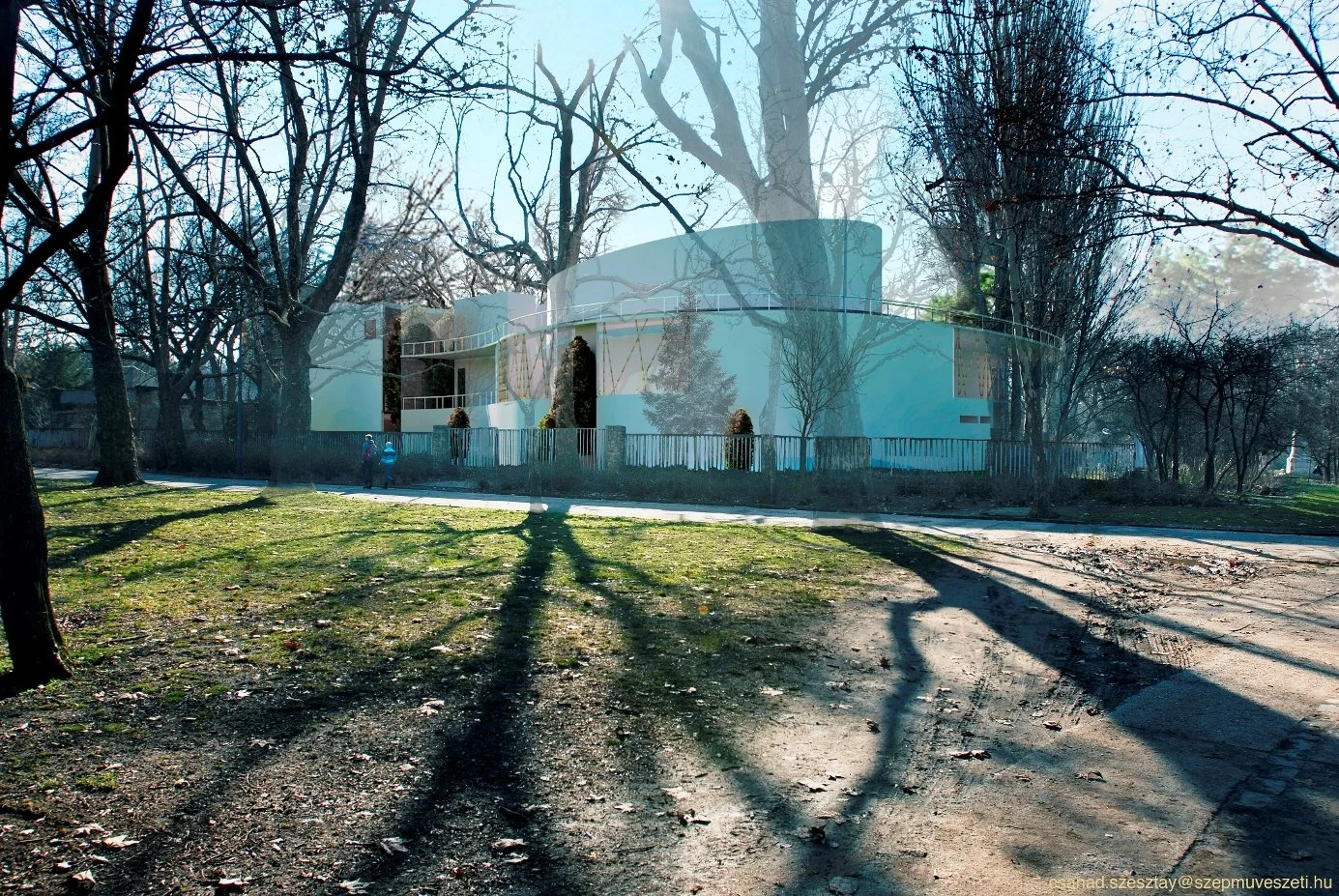
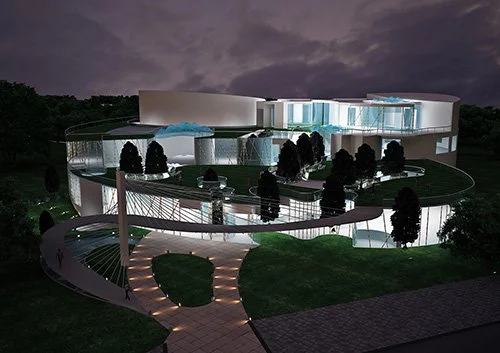
Set in Budapest’s historic City Park—opened in 1810 as the world’s first public urban park—the House of Hungarian Music reimagines a debris-filled site through ecological reuse. All recovered rubble and glass from the basement retaining walls, grounding sustainability in place while weaving the building around mature trees to preserve landscape continuity.
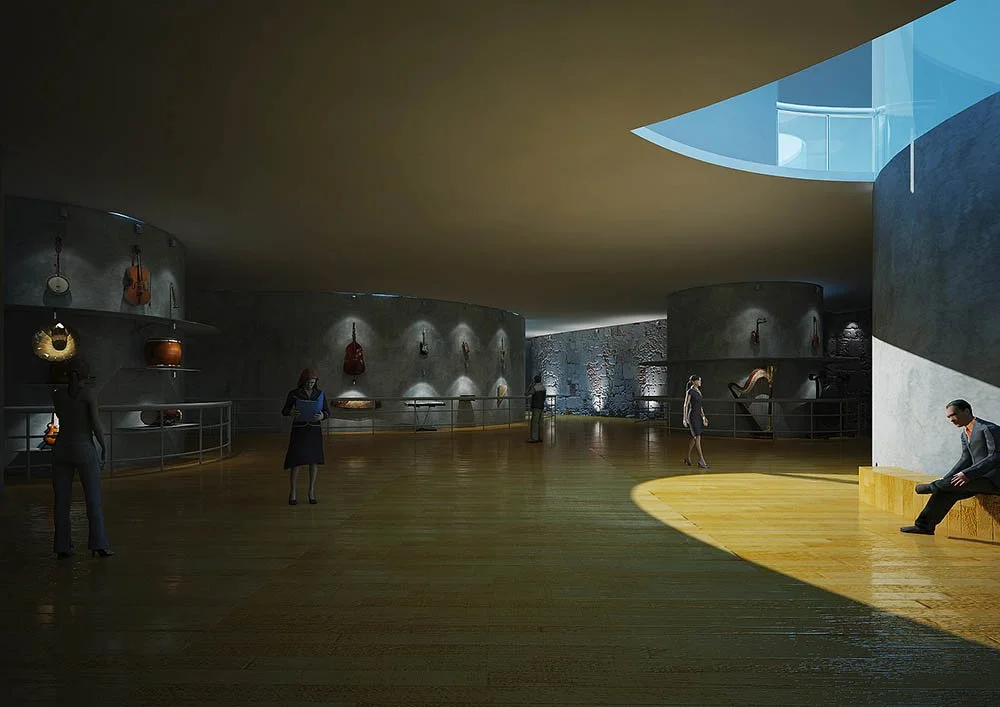
Organic clusters of internal courts and upper-level sky parks thread light, air, and activity from ground to roof, with transparent visitor zones dissolving indoor-outdoor boundaries. Passive solar design places exhibitions below grade to maximize natural light, uses low-E glazing on southwest-facing façades to reduce thermal gain, and employs geothermal cooling. Bamboo lines glass façades, softening daylight in a pavilion-like gesture.
Ductal concrete enables efficient ramps, walls, and slabs, including a harp-inspired ramp and musical walls evoking sound. This non-invasive form embodies “weaving architecture into nature, just as music weaves from the wind,” harmonizing cultural memory, ecology, and musical metaphor.
Project Type: Cultural spaces
Location: Budapest, Hungary
Year of Design: 2014
Typology: Cultural / Public Building
Project at a Glance
-
Primary/Low-Energy Materials
Bamboo; debris from demolished structures (rubble, glass, and site debris) reused; ductal concrete.
-
Natural Ventilation
Geothermal cooling for primary conditioned spaces.
Thermal Strategy
Exhibition spaces placed in the basement to reduce lighting and heat loads.
Daylighting
Ample daylight in all levels, including the basement.
Vertical openings for natural light and ventilation.
Renewable Energy Systems/Solar performance
High-performance low-E glazing on south, southwest, and west façades for solar gain.
Shading
Bamboo screens soften light and reinforce park continuity.
-
Framing / Structure
Ductal concrete ramps, walls, slabs, columns.